

Choosing a website design company is a business decision, not just a visual one. Your website may be the first place a potential customer learns about your company, compares your services, and decides whether to contact you. The right partner should understand your goals, explain the process clearly, build for real users, and help you measure whether the website is doing its job.
India has freelancers, specialist studios, full-service agencies, and low-cost website providers. Prices and quality vary, so the goal is not simply to find the cheapest quote. It is to find a team whose skills, process, communication, and deliverables match your needs and budget.
This guide explains how to evaluate a website design company in India, what to ask before signing a contract, what a proposal should include, and which warning signs to avoid.

1. Define what your business needs from the website
Before contacting providers, write down the main job your website must do. Examples include generating qualified enquiries, explaining professional services, selling products, accepting bookings, recruiting employees, or supporting existing customers. A clear goal helps you compare proposals on the same basis.
List the essential pages and features. A service business might need Home, Services, About, Case Studies, FAQs, and Contact. An online store may also need product categories, search, cart, checkout, payment integration, shipping rules, and order emails. A portal or web application may require authentication, roles, dashboards, and connections to other systems.
- Must-have: necessary to launch and achieve the main business goal.
- Should-have: useful improvements that can fit the budget.
- Later: enhancements that can be added after the first release.
This prioritization makes it easier for a provider to give you a realistic estimate instead of a vague price.
2. Review relevant portfolio work, not just attractive screenshots
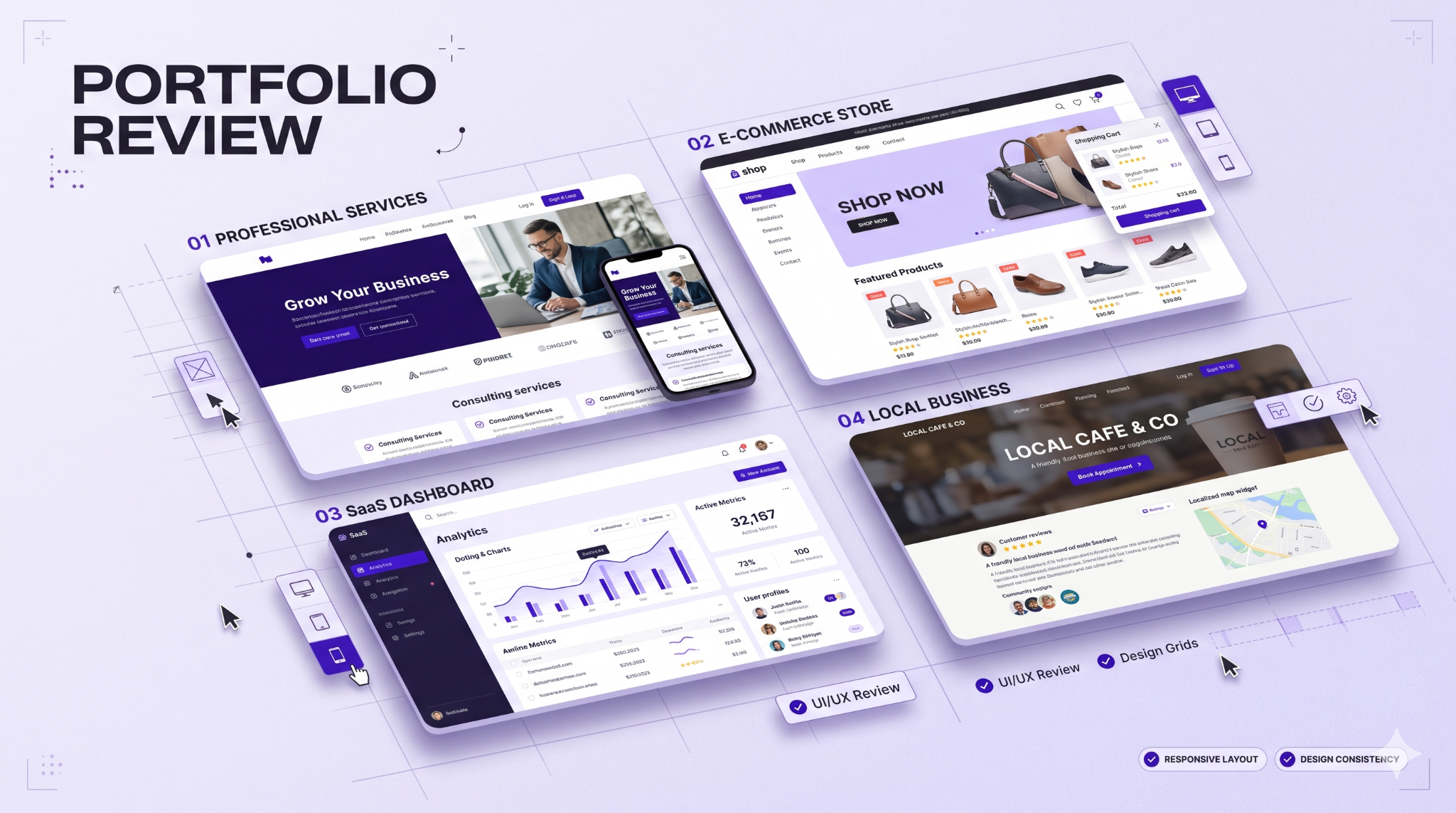
A polished homepage screenshot can look impressive, but it does not prove that the company can solve your particular problem. Review live websites where possible. Test them on a phone, open important pages, use the navigation, submit a form if appropriate, and check whether the content is easy to understand.
Look for projects that resemble your business in complexity, audience, or functionality. Ask what the provider was responsible for: strategy, UX research, visual design, copywriting, development, SEO setup, or ongoing optimization. Some portfolios show team work without explaining each person's contribution, so clarify this before hiring.
Useful portfolio questions include:
- What was the client's goal and who was the target audience?
- What problem did the team solve, and why were those design decisions made?
- Was the site built from a template or custom-designed?
- Can you show the live site and explain what changed after launch?
- Do you have experience with our required integrations or platform?
3. Check whether the process covers UX, content, and development
Website design is more than choosing colors and arranging sections. A dependable process connects business goals to information architecture, page structure, content, responsive design, development, testing, and launch.
Discovery and planning
The provider should ask about your customers, competitors, services, differentiators, existing analytics, and desired outcomes. If the conversation jumps straight to colors and animations without discussing the business, important requirements may be missed.
Structure and user experience
Ask how the team will organize pages and help visitors find information. Clear navigation, readable content, accessible forms, and obvious calls to action often matter more than decorative effects.
Visual design and responsive behavior
Request designs for key page types and an explanation of how layouts adapt to mobile, tablet, and desktop. Responsive design should be part of the plan, not an extra that appears near the end.
Development, testing, and handover
Confirm which technology or CMS will be used and why it fits your needs. Before launch, the site should be tested for broken links, forms, mobile layouts, browser compatibility, accessibility basics, performance, redirects, metadata, and analytics. You should also receive the access and instructions needed to manage the website after delivery.
4. Compare proposals line by line
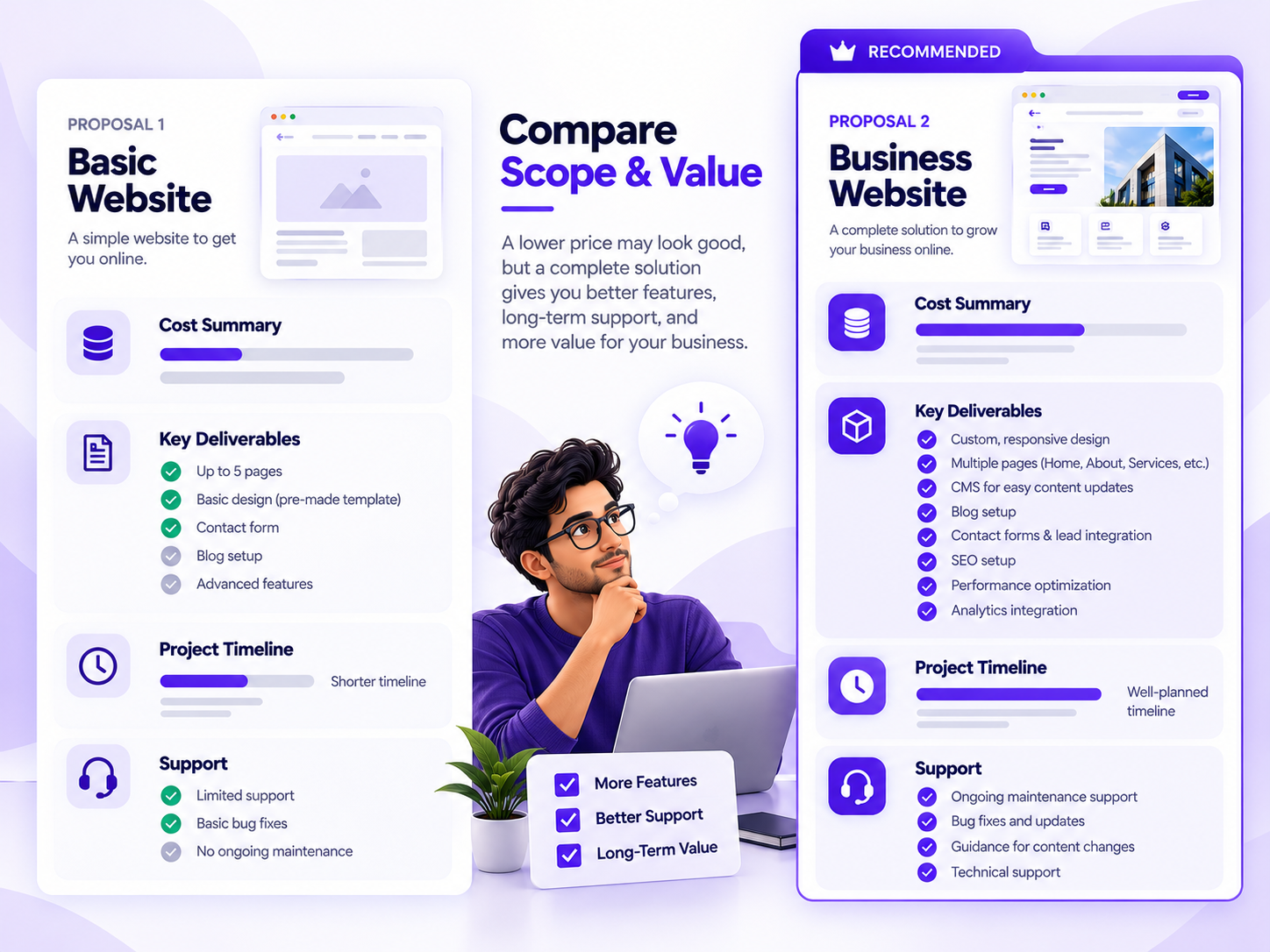
Do not compare quotes based on the final number alone. One provider may include content writing, analytics, migration, and training, while another may quote only design and development. Ask every shortlisted company to price the same scope.
| Proposal item | What to confirm |
|---|---|
| Scope and pages | Page list, templates, features, integrations, and exclusions |
| UX and visual design | Research, wireframes, design screens, responsive states, and revision rounds |
| Content | Who writes, edits, supplies, and approves copy and images |
| SEO setup | Titles, meta descriptions, heading structure, sitemap, robots rules, redirects, and indexing checks |
| Development and testing | Platform, browser testing, forms, performance checks, and launch support |
| Ownership | Domain, hosting, source files, CMS, analytics, and account access |
| Support and renewals | Warranty period, maintenance scope, recurring fees, and response times |
For help planning a budget, read our website design cost in India guide. Use it as a starting point for questions, not as a substitute for a quote based on your requirements.
5. Ask who will do the work and how communication will happen
Find out who your day-to-day contact will be, who makes design decisions, and who handles development and quality assurance. If work is outsourced or shared across multiple specialists, ask how responsibilities and reviews are managed.
Agree on communication channels, meeting frequency, feedback deadlines, decision-makers, and how scope changes are approved. A written milestone plan reduces misunderstandings and makes progress easier to track.
Also ask how the company handles delays. Your team may need to provide copy, product details, approvals, or access to existing systems. The provider should explain what they need from you and how late inputs affect the schedule.
6. Understand ownership, access, and recurring costs
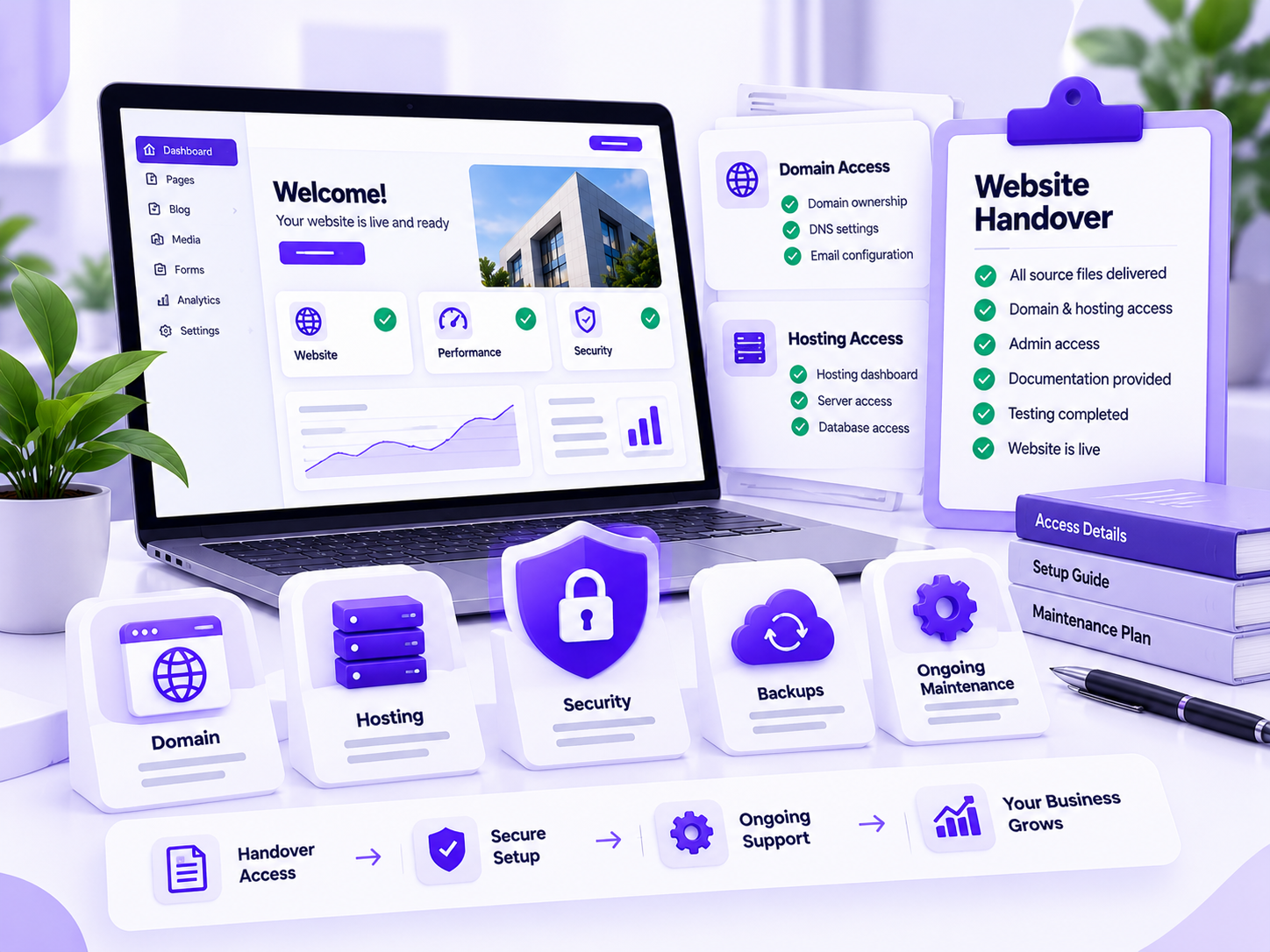
Your business should understand who owns and controls the domain, hosting account, website files, content, CMS, analytics, and third-party subscriptions. Ideally, important accounts are registered to your business and the provider receives only the access needed to perform their work.
Ask for a clear handover plan. It should cover administrator access, backups, credentials transfer, source files where applicable, documentation, and basic training. Clarify whether you can change providers later and whether any platform-specific export limitations apply.
Budget for ongoing expenses such as domain renewal, hosting, business email, paid plugins, stock assets, maintenance, security updates, and future content changes. The cheapest initial quote may not be the lowest total cost over the next year.
7. Check SEO and performance fundamentals
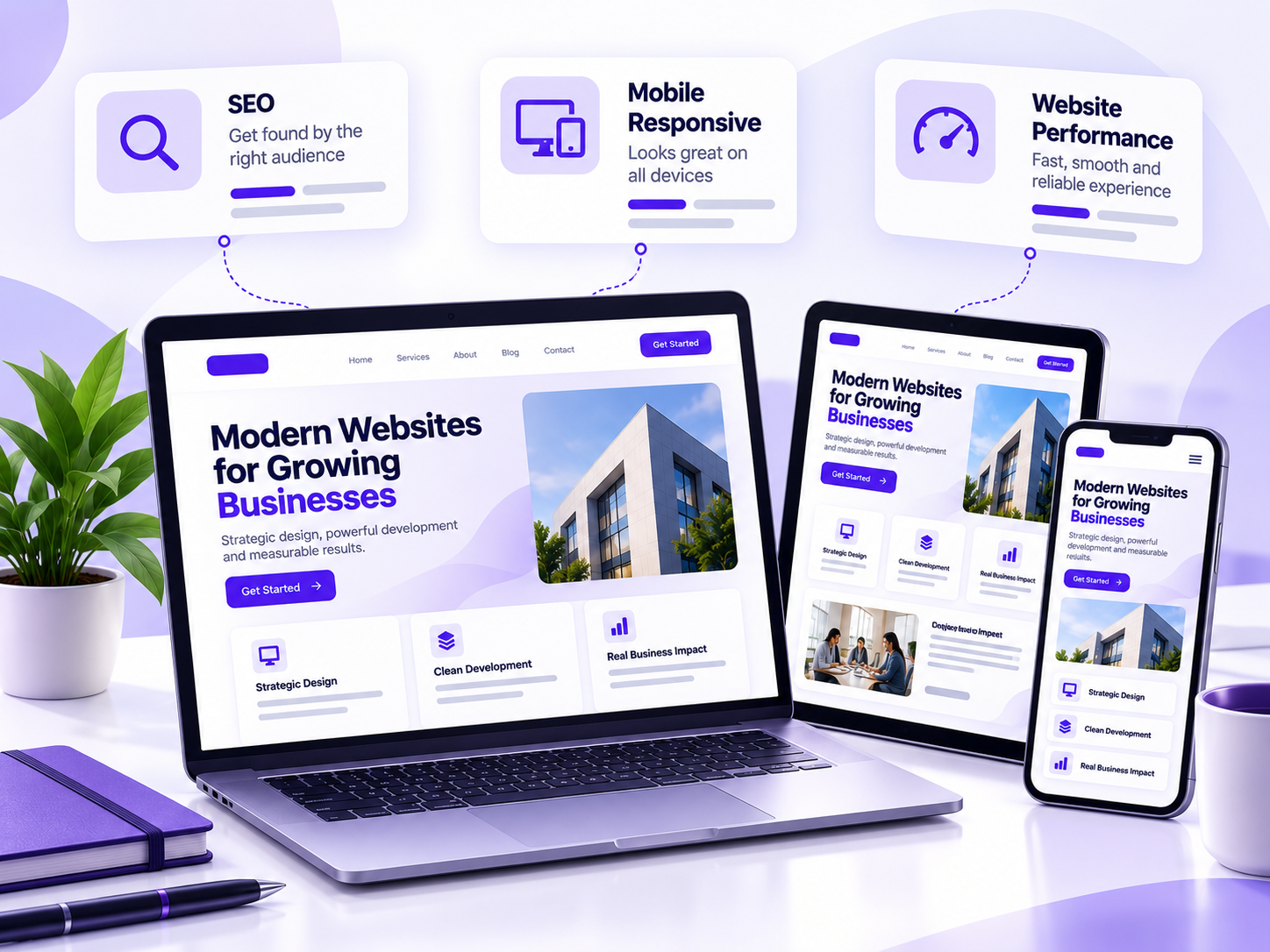
A website cannot guarantee search rankings, and no provider can honestly promise a specific position on Google. However, the company should be able to explain the technical and on-page foundations it will implement.
- Descriptive page titles and meta descriptions for important pages.
- A logical heading hierarchy and useful, original content.
- Descriptive image alt text where images communicate information.
- Clean URLs, canonical handling where needed, and appropriate redirects for changed URLs.
- An XML sitemap and correct indexing controls.
- Mobile usability, accessible navigation, and sensible page performance.
- Analytics and Search Console setup, with conversion events where relevant.
- Internal links that help visitors discover related services and resources.
Ask which items are included in the project and which require a separate ongoing SEO engagement. Technical setup is not the same as months of keyword research, content publishing, digital PR, or link acquisition.
8. Look for genuine reviews and references
Read reviews across more than one source where possible, paying attention to specific details about communication, reliability, problem-solving, and post-launch support. Generic praise is less informative than a review describing how the team handled a difficult requirement or resolved an issue.
If the project is high-value, ask for one or two references from past clients with comparable needs. Ask whether the company met the agreed scope, how changes were handled, and what support was like after launch. Respect client confidentiality; a provider may not be able to share private analytics or internal documents.
9. Watch for these warning signs
- Guaranteed rankings: no agency can guarantee a specific Google position.
- Unclear scope: a one-line quote without deliverables or exclusions can lead to disputes.
- No live examples: the provider cannot explain who built the work or what they contributed.
- Unrealistic timelines: promises that ignore content, integrations, testing, and approvals.
- Account lock-in: reluctance to clarify domain ownership, access, or handover.
- Hidden renewals: unclear hosting, plugin, maintenance, or licensing costs.
- Design before discovery: no questions about users, business goals, or success measures.
A low price is not automatically a warning sign, and a high price is not proof of quality. Judge the offer by evidence, clarity, fit, and the risks you are being asked to accept.
10. Use a simple scorecard to choose your partner
After speaking with two or three providers, score each one against the same criteria. For example, rate each category from 1 to 5 and apply weights based on your priorities.
| Criteria | Suggested weight |
|---|---|
| Relevant portfolio and industry understanding | 20% |
| UX, design, and development process | 20% |
| Scope clarity and value for money | 20% |
| Communication and project management | 15% |
| SEO, accessibility, and performance approach | 15% |
| Ownership, support, and handover | 10% |
The score is a discussion tool, not a scientific guarantee. Use it to identify trade-offs and questions that still need answers before making a decision.
Frequently asked questions
How do I choose a website design company in India?
Define your goals and scope, review relevant live work, compare itemized proposals, check the design and development process, confirm ownership and recurring costs, and speak to past clients where possible.
How many website design companies should I compare?
Two or three well-matched providers are usually enough to compare approaches and pricing without turning the process into a lengthy procurement exercise. Give each the same brief so their proposals are comparable.
Should I hire a freelancer or a web design agency?
A freelancer may be a good fit for a clearly scoped project that needs direct collaboration. An agency may suit projects requiring several disciplines, such as UX, visual design, development, content, and ongoing support. The right choice depends on complexity, availability, and accountability—not the label alone.
Does a website design company also provide SEO?
Some providers include basic technical and on-page SEO setup, while others offer SEO as a separate service. Confirm exactly what is included and remember that ongoing search growth depends on competition, content quality, technical health, and many other factors.
What should I prepare before requesting a quote?
Prepare a short company introduction, target audience, website goals, required pages and features, examples you like, available content, desired launch date, and approximate budget. You do not need a complete technical specification, but clear priorities help providers estimate more accurately.
Final checklist before you sign
- We agree on the business goal, audience, pages, and functionality.
- The proposal lists deliverables, exclusions, milestones, and payment terms.
- We know who will do the work and how feedback will be managed.
- SEO, responsive design, accessibility basics, testing, and analytics are clearly scoped.
- Domain, hosting, content, and account ownership are documented.
- Recurring fees, maintenance, warranty, and handover are understood.
Planning a website for your business?
The best website design partner is the one that understands your goals, communicates clearly, and builds a site your business can manage and improve. Take time to compare the process and scope—not just the price—and make sure responsibilities are documented before work begins.
Explore Nest Webs to learn about our website services. When you're ready to discuss a project, share your business goals, required features, timeline, and budget so the right scope can be planned.