
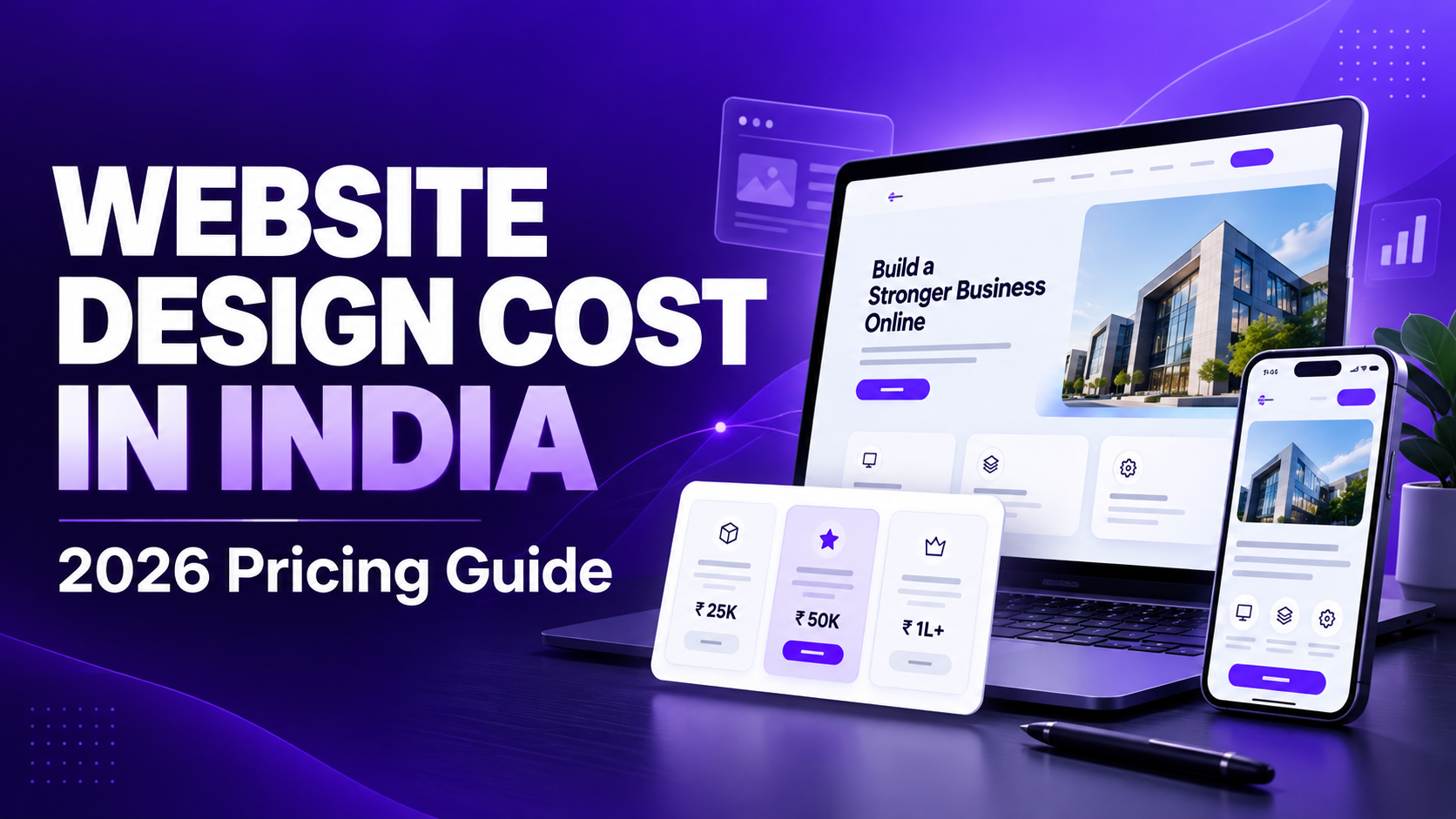
A business website is more than an online brochure. It can help customers discover your company, understand your services, compare options, and contact you when they are ready to buy. But before starting a project, most business owners ask the same question: how much does a website cost in India?
The honest answer is that there is no single price. A simple informational website, a custom-designed business site, an online store, and a web application have very different requirements. The final cost depends on the number of pages, design complexity, functionality, content, integrations, and ongoing support.
This guide explains the main website cost factors, the questions to ask before hiring a designer or agency, and how to budget without paying for features you do not need.
How much does a website cost in India?
Website pricing varies significantly by provider, scope, and quality. The ranges below are broad planning estimates, not fixed market prices or quotes. Actual proposals can fall outside them, especially when requirements are complex.
| Website type | Indicative project budget | Usually includes |
|---|---|---|
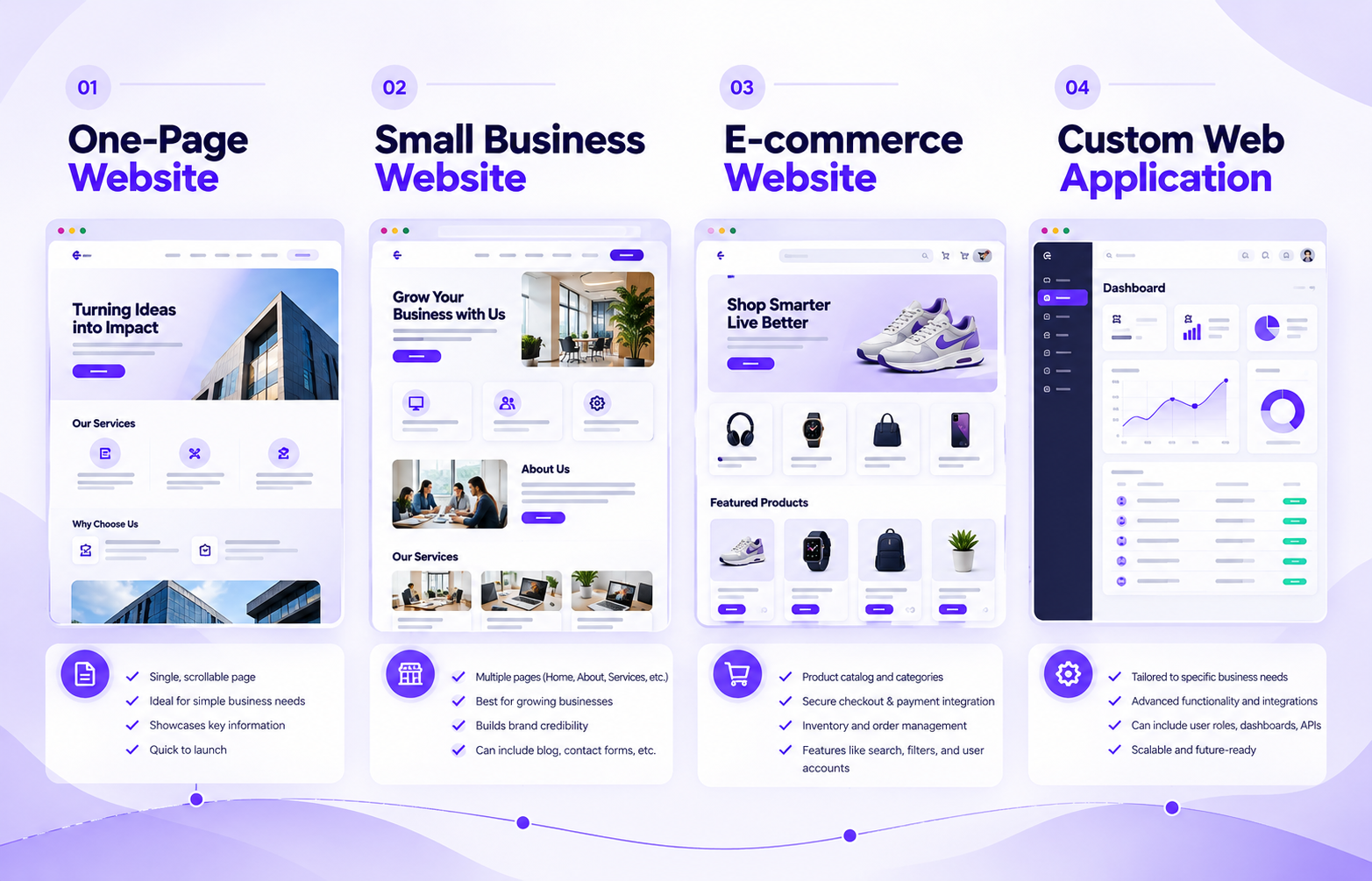
| Basic one-page website | ₹5,000–₹20,000 | Single landing page, contact details, basic responsive layout |
| Small business website | ₹15,000–₹60,000 | Several pages, service information, contact form, mobile-friendly design |
| Custom business website | ₹40,000–₹1,50,000+ | Custom UI, tailored page layouts, integrations, stronger content structure |
| E-commerce website | ₹40,000–₹2,50,000+ | Product catalogue, cart, checkout, payment and shipping configuration |
| Custom web application | ₹1,00,000 to several lakhs or more | Authentication, dashboards, workflows, databases and business-specific features |
These figures are starting points for budgeting, not a promise that every project can be delivered at the lowest end. Always compare proposals with the same scope and ask what is excluded.
What affects website design cost?
1. Number of pages and templates
A five-page business website is usually simpler than a site with dozens of unique pages. However, page count alone does not determine price. If many pages share a consistent template, they may cost less than a smaller site with highly customized layouts and interactions.
2. Custom design versus a ready-made template
A template can be a sensible choice when the budget is limited and the business has straightforward needs. Custom UI/UX design gives more control over brand identity, content hierarchy, accessibility, and the customer journey. The right choice depends on whether the template can support your actual business goals.
3. Functionality and integrations
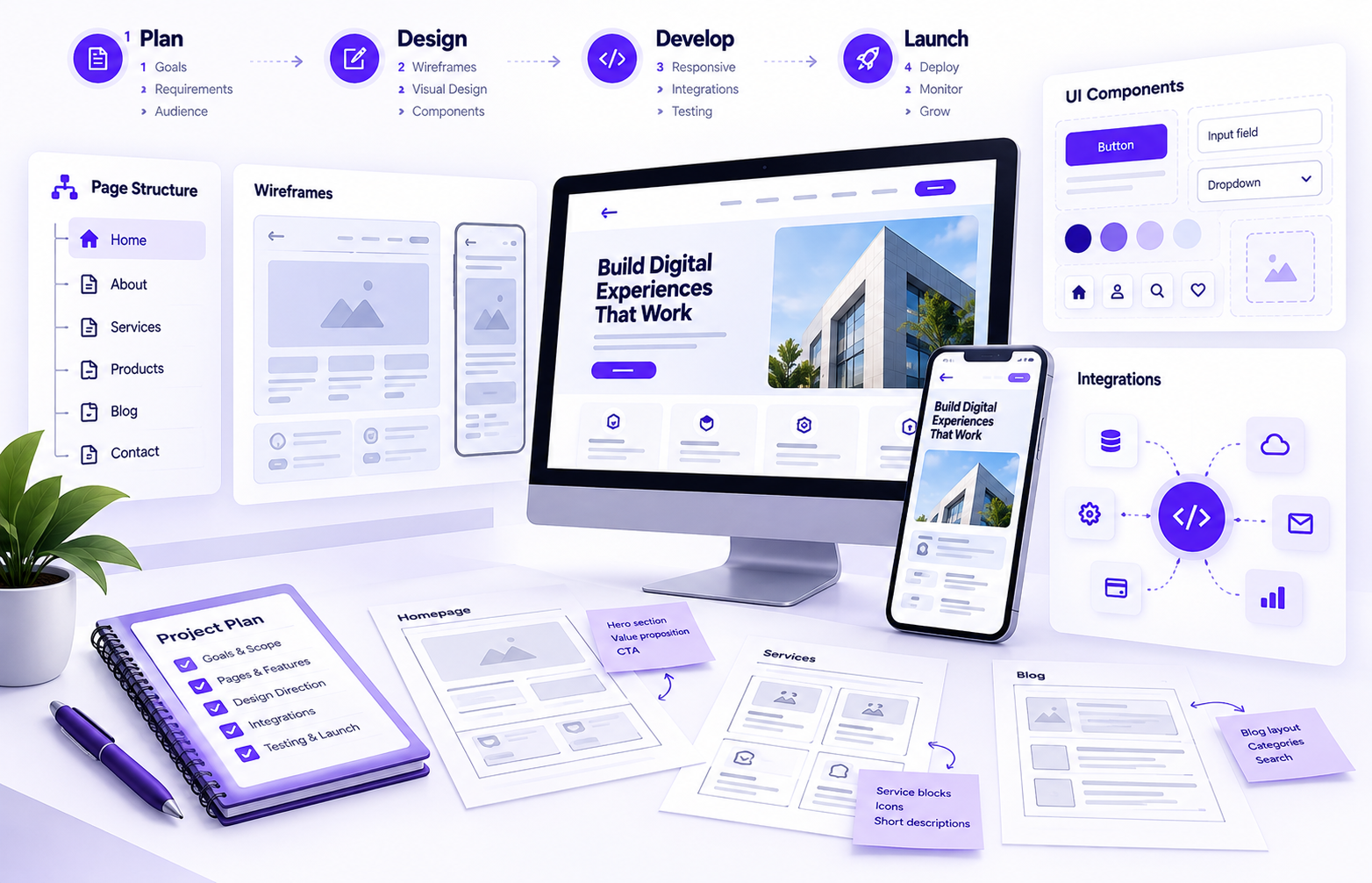
Contact forms, booking flows, payment gateways, customer portals, inventory management, CRM integrations, and automated workflows all add work. List the features you genuinely need before requesting a quote. Adding requirements midway through development can increase both cost and delivery time.
4. Content, photography and branding
Website copy, product photography, illustrations, brand identity, and custom graphics may be separate line items. If you supply complete, approved content, the project may be simpler. If the provider needs to plan, write, source, or create everything, budget for that work explicitly.
5. SEO, performance and accessibility
Search-friendly page structure, descriptive titles, metadata, optimized images, sensible internal links, fast loading, mobile usability, and accessible interactions should be considered from the start. Basic technical setup is different from an ongoing SEO campaign, so confirm which activities are included.
6. Maintenance and support
A website needs updates, backups, security checks, bug fixes, and occasional content changes. Ask whether post-launch support is included, how long it lasts, and what happens when the support period ends.
Website costs people often forget
The initial design and development fee is only one part of the total cost of ownership. Depending on your setup, you may also need to budget for:
- Domain registration: a recurring fee to keep your domain name.
- Hosting: the server or platform that serves your website.
- Business email: mailboxes and email delivery services, if required.
- Paid plugins or subscriptions: tools for forms, bookings, analytics, or e-commerce.
- Content production: copywriting, photography, video, and illustrations.
- Maintenance: updates, backups, monitoring, and technical support.
- Marketing: SEO, paid advertising, social media, and conversion improvements.
Ask for a first-year cost estimate as well as the initial project price. This makes it easier to compare offers fairly and avoid surprises after launch.
Freelancer, agency or DIY website builder?
| Option | Best for | Trade-off |
|---|---|---|
| DIY website builder | Very small budgets and simple sites | More hands-on work; platform and template limitations |
| Freelancer | Clearly scoped projects and direct collaboration | Capacity and specialist coverage vary by individual |
| Design or development agency | Projects needing coordinated design, development and delivery | Can cost more; scope and communication must be managed |
Do not choose based on price alone. Review relevant live work, confirm who will actually do the work, understand the handover process, and get ownership of the domain, source files, accounts, and content clarified in writing.
How to choose the right website package
- Define the business goal. Decide whether the website needs to generate enquiries, sell products, take bookings, explain a service, or support existing customers.
- Prioritize essential pages. Most service businesses need a clear home page, service pages, an about page, and a contact or enquiry path. Add pages based on real customer questions.
- Separate must-haves from nice-to-haves. Launch with the features that support the primary goal. Plan advanced functionality for a later phase if it is not needed immediately.
- Ask for an itemized proposal. Request details for design, development, content, integrations, SEO setup, hosting, maintenance, revisions, and delivery milestones.
- Confirm ownership and access. Your business should retain appropriate access to the domain, hosting, analytics, content management system, and project files.
- Agree on success measures. Track relevant outcomes such as qualified enquiries, form completion, sales, booking requests, or calls—not just page views.
What should a good website design proposal include?
Before approving a quote, make sure the proposal clearly defines the deliverables, page list, responsive behavior, browser support, content responsibilities, revision limits, third-party costs, timeline, payment milestones, testing, launch process, and post-launch support.

It should also explain what is not included. For example, a website with basic SEO setup does not automatically include keyword research for every service, monthly content publishing, link building, or ongoing campaign management.
Is a cheap website worth it?
A low-cost website can be the right decision for a new business that needs a simple online presence. The problem is not a low price by itself; it is unclear scope, poor mobile usability, inaccessible content, weak security, slow performance, or a site that cannot support the business as it grows.
Likewise, a more expensive website is not automatically better. Pay for capabilities that solve a real problem, and ask the provider to explain why each major feature is needed.
Frequently asked questions
How much does a 5-page website cost in India?
A basic five-page business website may fit within a small-business budget, but the final quote depends on custom design, content, integrations, and functionality. Ask for a scope-based estimate rather than relying on page count alone.
Does website design include SEO?
Some providers include basic technical SEO setup, such as editable page titles, meta descriptions, crawlable pages, and image optimization. Keyword strategy, content production, digital PR, and ongoing SEO usually need to be specified separately.
Do I need to pay for hosting every year?
Most websites have recurring hosting or platform costs. The amount depends on the technology, traffic, storage, support needs, and hosting provider. Confirm renewal prices before choosing a plan.
How long does it take to build a business website?
A simple site can take days to a few weeks, while a custom website or web application may take several weeks or months. Content readiness, feedback speed, integrations, and approval cycles all affect delivery time.
Can I update the website myself after launch?
Yes, if the site includes a suitable content management system or editing workflow. Ask for a handover and training, and confirm whether updates require a developer.
Ready to plan your business website?
Start with your business goals, the pages customers need, and the features that will help them take action. A clear scope makes it easier to get a realistic quote and choose a website that fits your budget without sacrificing the essentials.
Visit Nest Webs to learn more about the business and its services. Before committing to a project, share your goals, target audience, preferred launch date, and budget so the scope can be matched to your needs.
Pricing note: the figures in this article are broad planning estimates, not verified quotations from every Indian provider. Confirm current rates and all recurring charges directly with the service provider before making a purchase decision.